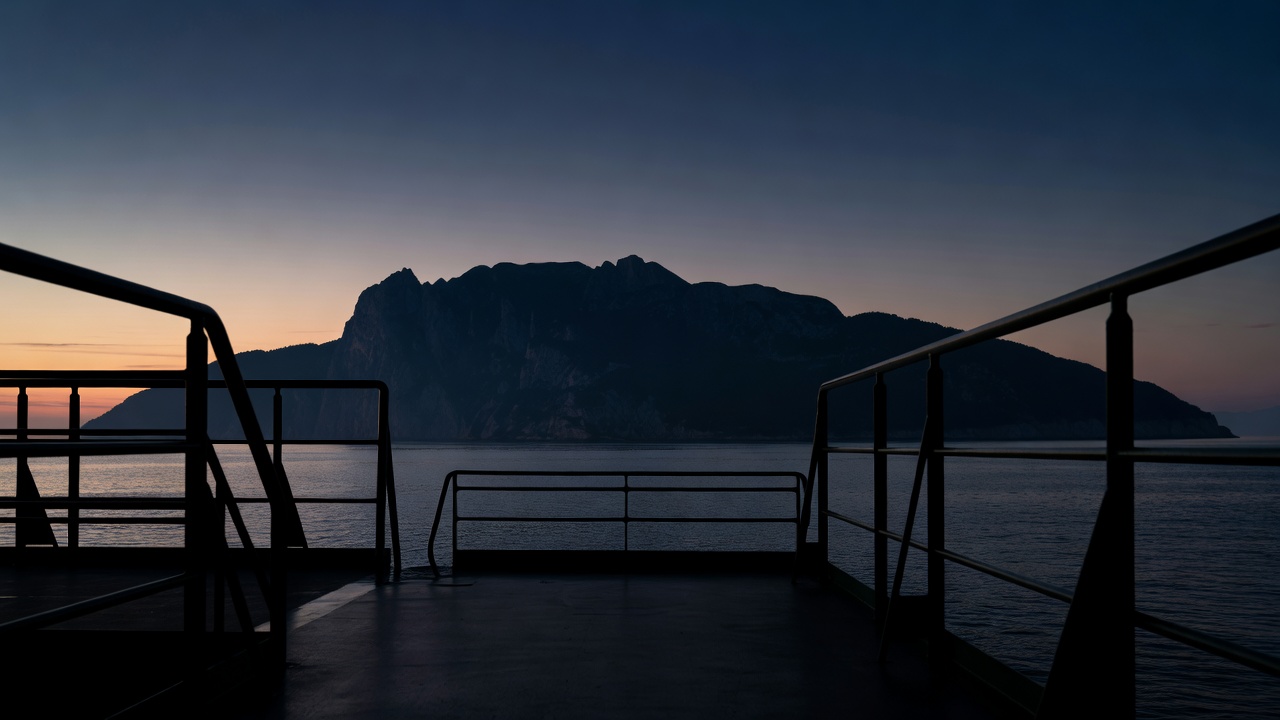
Read the network before the map
Island-hopping looks beautifully simple on a map. In practice, the useful unit is not distance but a confirmed connection on the day you need it. Adjacent islands may have no direct sailing, while a more distant port may be the main hub. Begin with published operator schedules, seasonal service patterns and the location of the actual departure terminal. A city’s ferry port and airport may be much farther apart than your itinerary suggests.
The Cyclades, Scotland’s Small Isles and the Azores offer three distinct planning contexts. In the Cyclades, routes can depend on season, vessel and port sequence. The Small Isles are shaped by limited sailings and the needs of island communities. In the Azores, proximity within one island group does not imply convenient year-round sea connections across the entire archipelago. Never assume that an attractive sequence on a travel post is a currently operating route.
Choose an anchor island with accommodation and practical alternatives, then add a second place only when the transport supports it. A return to the same hub can be more coherent than a supposedly elegant loop built from fragile connections.
Build a route with a proper middle
Give each island enough time to become more than an arrival photograph. Choose places for contrasting experiences: a walkable harbour and a quieter inland village, a volcanic landscape and a working waterfront, or a base with local buses and a second stop best explored on foot. Avoid assuming that every island offers late food, reliable mobile coverage, cash machines or a convenient taxi on demand.
A route framework, not a sailing schedule
- Arrive at your gateway and stay nearby before the first crossing.
- Use an anchor island for several nights and learn its local transport rhythm.
- Add one connected island only after checking the outward and return sailings.
- Return to the gateway with a meaningful buffer before an important onward departure.
For a Greek route, research Naxos and Paros as possible ingredients rather than assuming a specific connection. For a Scottish journey, start with Mallaig and investigate what the current Small Isles timetable makes possible. For the Azores, compare the practical connections around Faial, Pico and São Jorge. These are starting points for verification, not ready-to-book promises.
A day trip can be the right choice, but only if the return is realistic and the visit does not depend on rushing a fragile location. Sometimes the better story is spending another afternoon in the place you already know a little.
Let uncertainty into the plan
Wind, swell, mechanical problems and operational changes can affect sailings. Check the operator’s service status before leaving your accommodation and again before travelling to the port. Ask where cancellation messages appear and what rebooking support is available. A booking confirmation is not a guarantee that the sea will cooperate.
Keep medication, essential documents, charging equipment and a change of clothes with you. Consider motion sickness before boarding and seek advice from a pharmacist or clinician if appropriate. On board, use designated passenger areas, hold handrails and follow crew instructions. A dramatic deck photograph is never worth crossing a barrier or remaining outside when the crew asks you to come in.
Budget for the possibility of an extra night, but remember that smaller islands may have little spare accommodation. Discuss disruption arrangements with your host and avoid scheduling an inflexible flight immediately after the final ferry. No universal buffer removes the risk; its length should reflect the route, season, alternative transport and consequences of missing the connection.
Travel as a temporary neighbour
Ferries are often essential transport, not floating sightseeing platforms. Keep luggage out of working areas, allow space for residents and follow local vehicle restrictions. Before bringing a car or bicycle, verify reservation rules and whether you need it at all. A foot-passenger route can be simpler, but only where the arrival port connects sensibly with your accommodation.
Use refill points where water is safe, take litter away when disposal is limited, and ask before photographing working harbours or people. Stay off fragile dunes and nesting areas. A quiet cove is not automatically a swimming recommendation: currents, boat traffic, water quality and access restrictions need separate assessment.
Spend locally where practical and accept that a closed café, a quiet afternoon or a postponed crossing can reveal the island’s actual rhythm. The aim is not to extract the maximum number of destinations. It is to make a connected journey that leaves room for the places—and the people—that make the crossing worthwhile.